Pâte brisée, step by step: five moves for a crisp crust
Four ingredients, fifteen minutes, and yet it sticks, shrinks or comes out soggy under the quiche. The five moves of our basic recipe, and what the tests really say about each one.
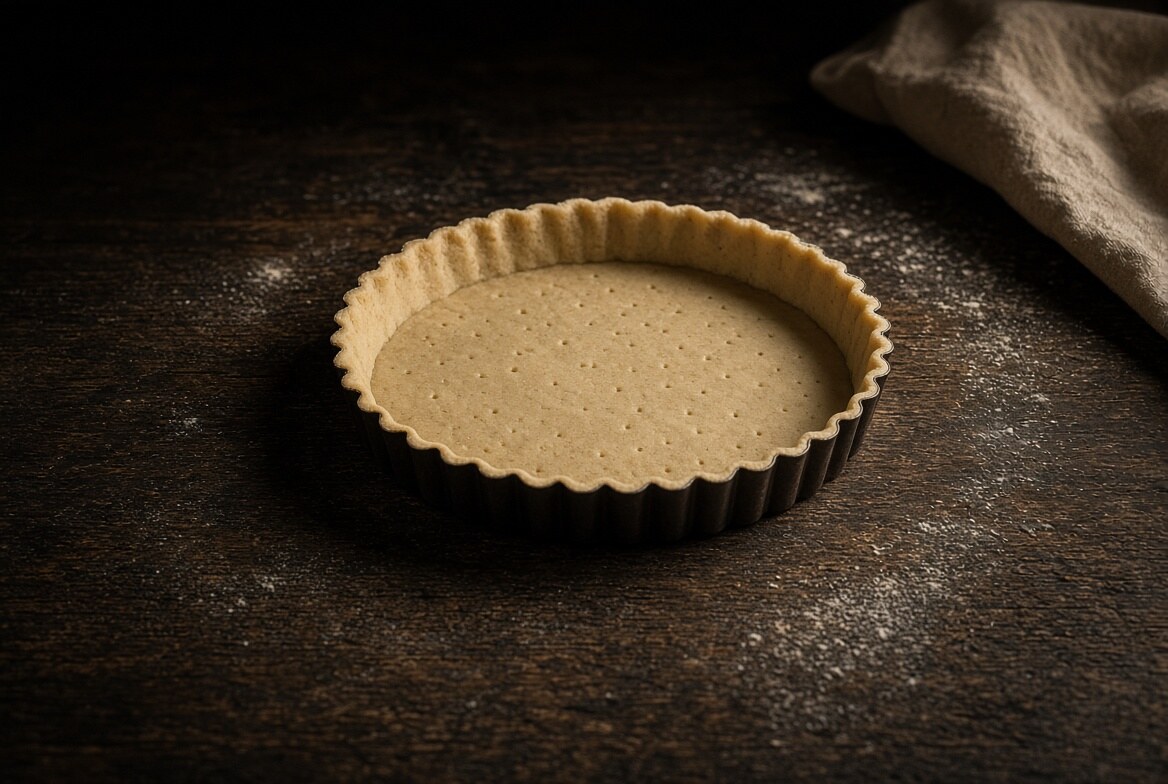
A Sunday in November, the crisper drawer full of leeks, a quiche in mind. You were going to grab a roll of dough at the supermarket, then you told yourself that four ingredients couldn't be rocket science. An hour later, the dough had stuck to the rolling pin, shrunk back in the pan, and the bottom came out soggy under the filling.
Good news: pâte brisée doesn't ask for much, as long as you do things in order. Here are the five moves of our basic recipe, and what the tests say about each, including when they contradict habit.
What you need
For a six-serving pan: 250 g (8.8 oz) of flour, 125 g (4.4 oz) of cold butter cut into cubes, 50 ml (3½ tbsp) of cold water and a pinch of salt. For the flour, a T55 does the job, as we explained in our article on flour types.
1. Rub in the cold butter
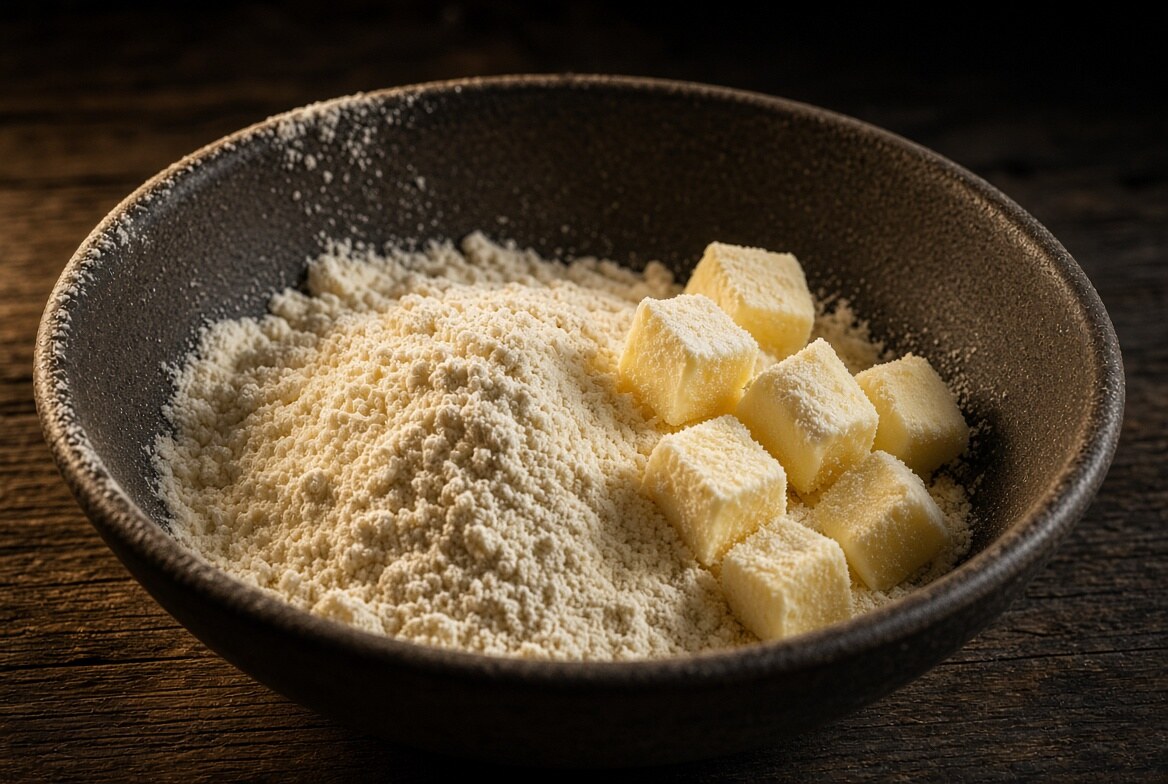
Flour and salt in a mixing bowl, then the butter cubes, straight from the refrigerator. Rub them into the flour with your fingertips until you get coarse crumbs, without letting the butter melt.
Why cold? In 2025, the molecular gastronomy seminar made the same dough two ways: with butter at 2 °C (36 °F) barely worked, it came out slightly flaky and crisp; with melted butter, crumbly and sandy (INRAE / AgroParisTech, 2025). The authors themselves call these sample tests, to be repeated before turning them into a rule.
Le Chaudron's tip Butter starting to get greasy and stick to your fingers? Slide the bowl into the refrigerator for ten minutes, then pick up where you left off.
2. Pour the water in all at once, then stop
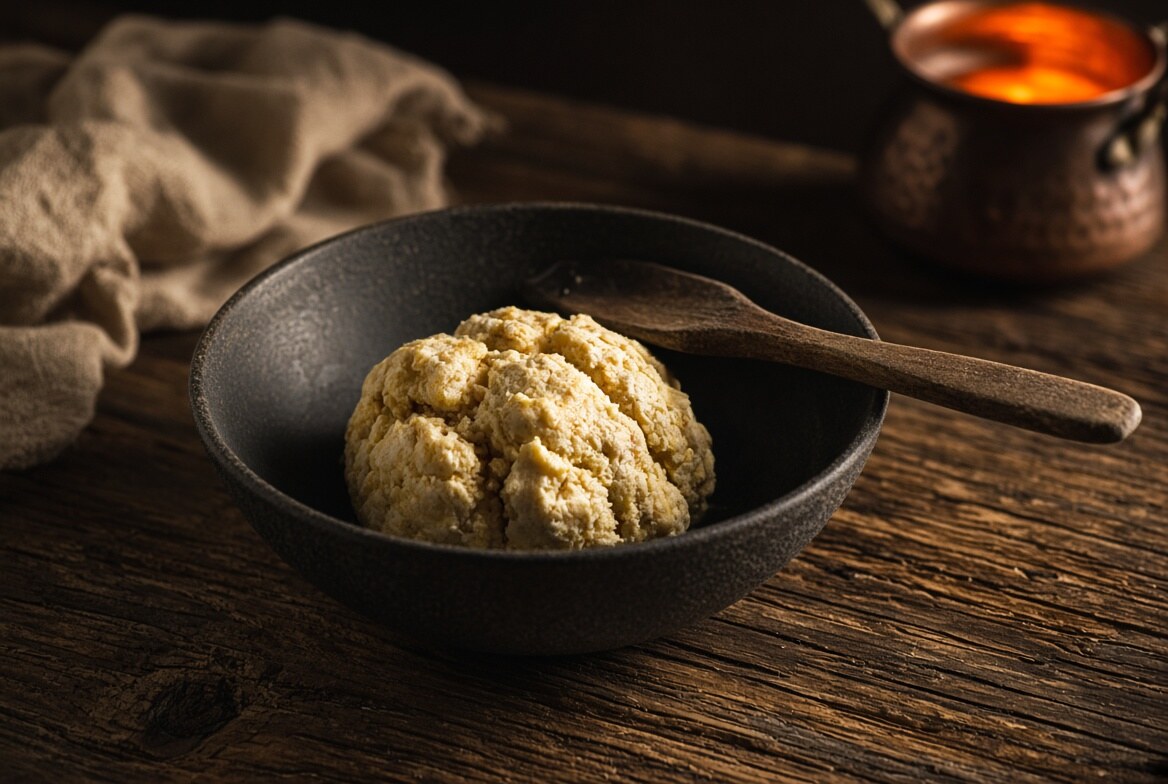
Make a well, pour in all the cold water at once and mix with the spatula, just enough to bind. No kneading.
In the same seminar, a second cold-butter dough was kneaded and pressed at length. The result: denser, less flaky, crunchy rather than crisp (INRAE / AgroParisTech, 2025). One nuance: the difference was clearly visible under the knife, much less in the mouth, since in the blind tasting the testers couldn't tell it apart from the lightly worked dough. Add to that a reason given by our recipe: overworked, the dough becomes elastic and shrinks during baking.
3. A disk, then the cold
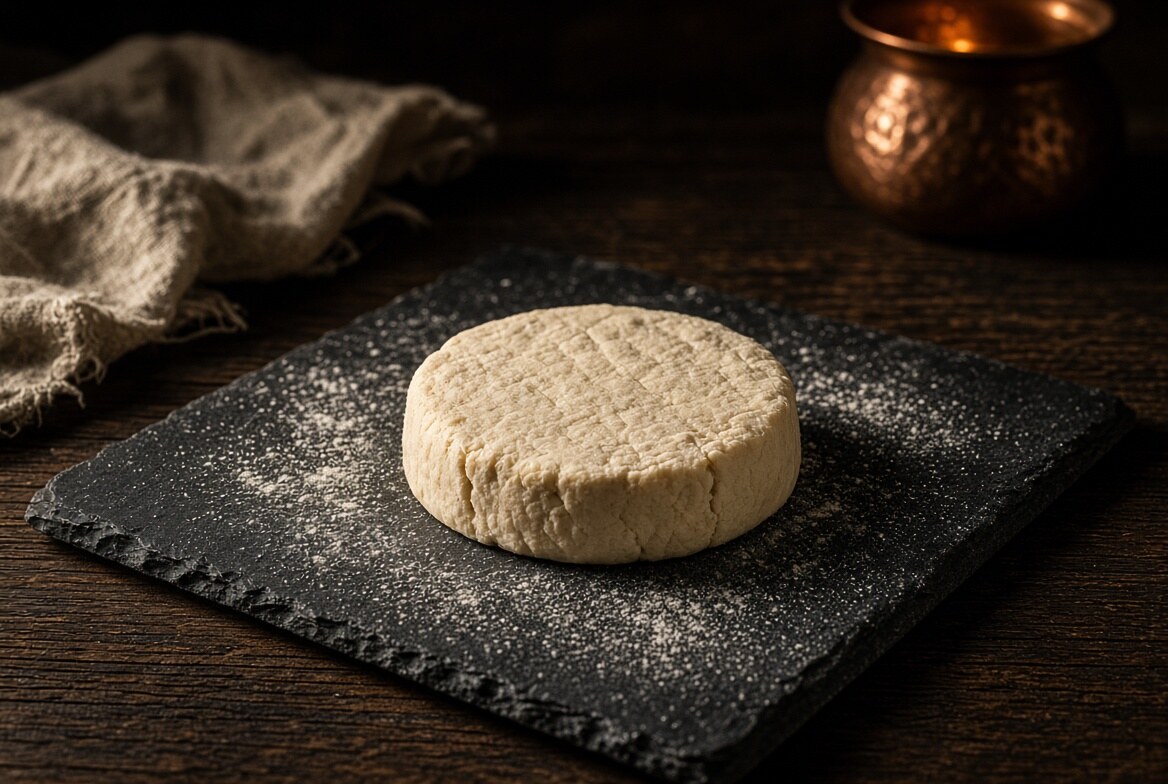
As soon as the dough holds together, gather it into a ball, flatten it into a disk, wrap it and leave it at least 30 minutes in the refrigerator. In the cold, the butter firms up and the dough no longer sticks to the rolling pin.
Does this rest keep the dough from shrinking in the oven? You read it everywhere. Yet on a pâte à foncer, pâte brisée's direct cousin, a 2021 test gave the opposite: the dough rested in the cold shrank by 7 to 9 mm during baking, versus 2 to 5 mm for the dough baked right away (INRAE / AgroParisTech, 2021). The author considers the results contradictory, drawn from single tests, and suspects that shrinking happens mostly during rolling and in the minutes that follow.
So keep the rest for what it surely does: a firm dough that's easy to roll out.
4. Roll it out to 3 mm, turning as you go
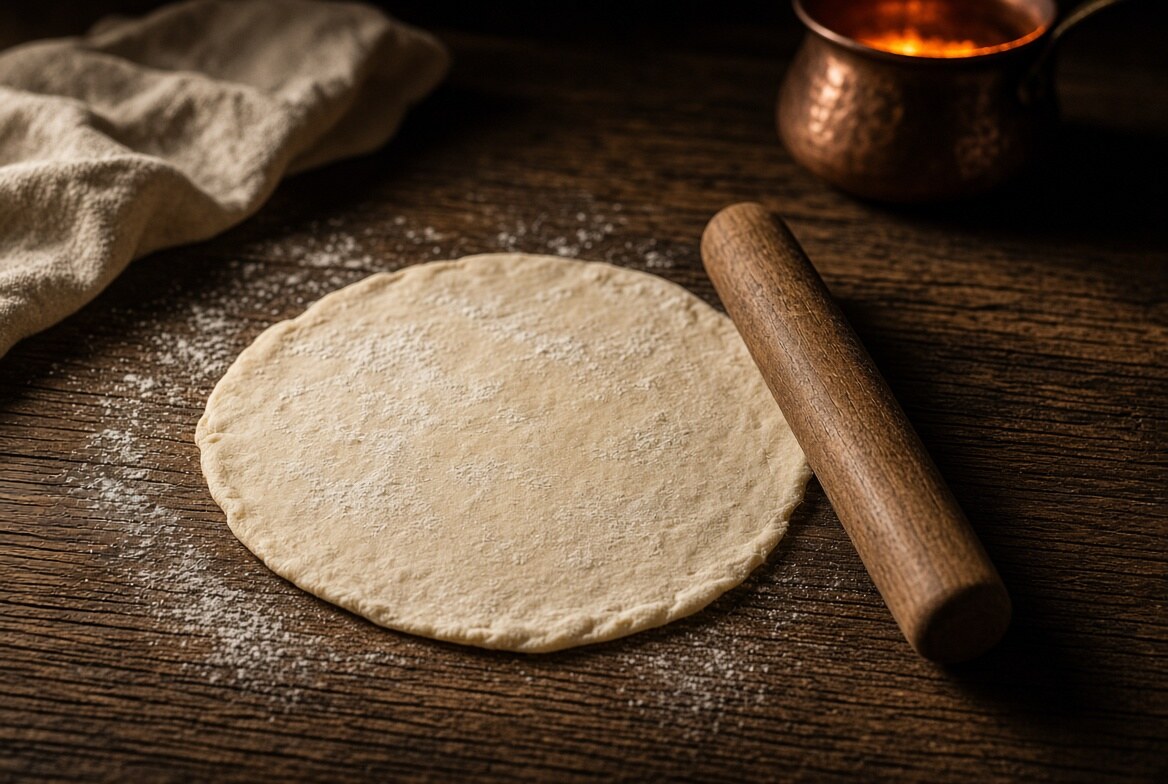
Dust the work surface with a little flour, roll the cold dough from the center out to the edge and give it a quarter turn regularly: the thickness stays even everywhere. Aim for 3 mm (⅛ in), like our recipe; a chef at Meilleur du Chef gives 3 to 4 mm for his quiche lorraine (Meilleur du Chef).
A lead to try, not yet proven: let the rolled-out dough settle for a few minutes before putting it in the pan, since that may be when it shrinks (INRAE / AgroParisTech, 2021).
5. Line, prick, and blind-bake for a quiche
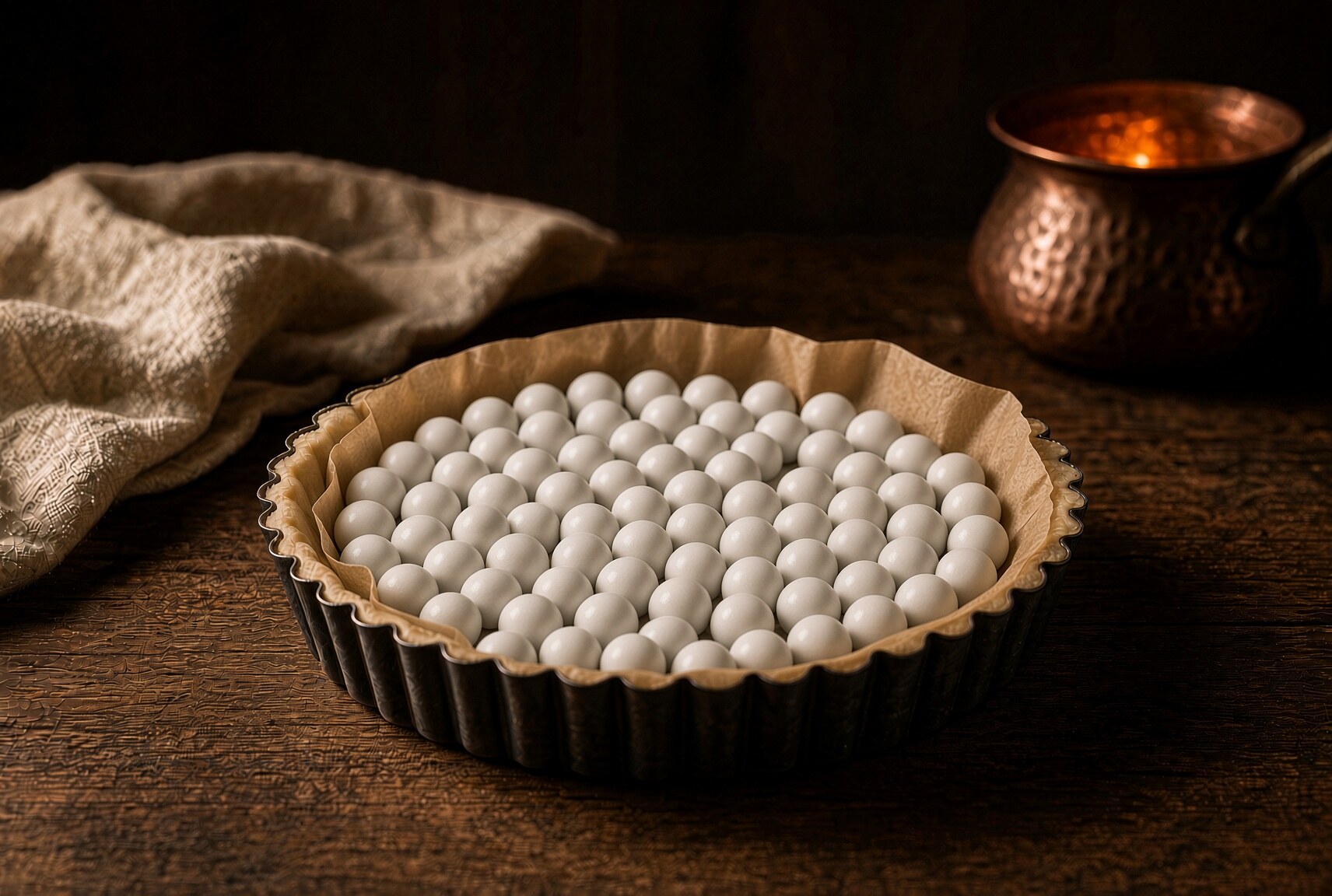
Lay the dough in the pan, letting the edges hang over a little: if they shrink back, there's still some margin. Prick the bottom with a fork so it doesn't puff up.
With a liquid filling, pre-baking changes everything. Our leek quiche is blind-baked for 10 minutes at 200 °C (400 °F), under parchment paper and weights, before getting the leeks and the custard, then 35 minutes at 180 °C (350 °F). At Meilleur du Chef, blind baking stays optional, but the chef recommends it for a well-baked bottom that doesn't go soggy, and considers it essential to chill the lined pan before it goes in the oven (Meilleur du Chef).
Your apple tart, on the other hand, can do without: its fruit doesn't drown the dough the way a quiche custard does.
The verdict Cold butter, water all at once, and you stop as soon as the dough holds together: that's where crispness is decided. As for the rest, it mostly makes the dough easier to handle, and for a quiche, blind baking does the rest.
To go further
- Pâte brisée, the basic recipe
- Quiche aux poireaux
- Quiche lorraine
- Tarte aux pommes traditionnelle
- The pâte brisée workshop
Sources — INRAE / AgroParisTech, molecular gastronomy seminar, May 2025 (crisp pâte à foncer) · INRAE / AgroParisTech, June 2021 seminar (dough shrinkage) · Meilleur du Chef, quiche lorraine
Image credits — All images in this article are AI-generated for Le Chaudron (illustrations, not documentary photos).