Your choux pastry collapses out of the oven: the 4 mistakes to avoid
They puffed up, they looked great, then they caved in. Most of the time, the recipe isn't to blame: it's how they come out of the oven.
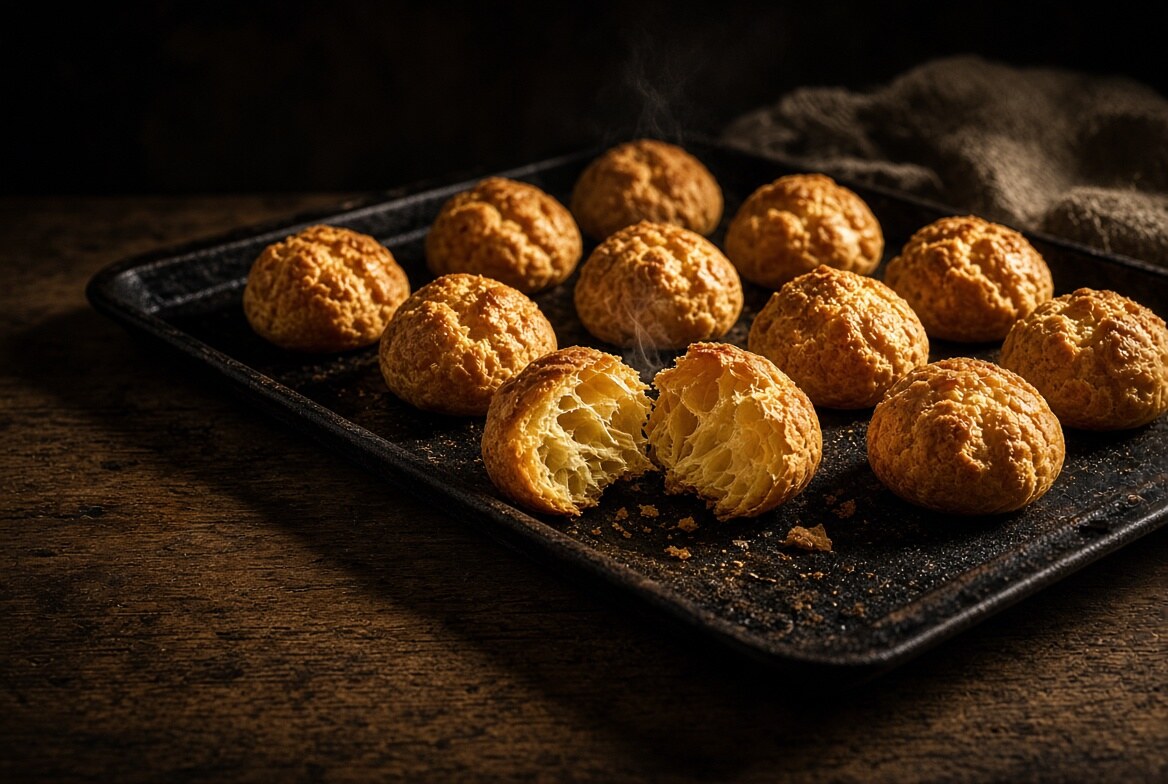
You watched them rise through the oven window. Baking sheet out, proud of your batch. Thirty seconds later, your choux puffs have turned into flat disks, wrinkled, damp in the middle. Yet the recipe was good, and you weighed everything to the gram.
Almost always, it's the same thing: your choux weren't done. They looked baked, but they weren't yet.
What makes a choux puff up is steam
Choux pastry contains neither yeast nor baking powder. The water it contains is what makes it rise: in the oven, it turns into steam, and the dough, made supple by the egg and flour, stretches around it like a balloon. Then the heat sets the proteins and the shell holds up on its own (Purdue Extension).
That's the whole story. As long as the shell isn't set, steam is what holds the choux up. Take the steam away too early, and it has nothing left to stand on.
1. You opened the oven too early
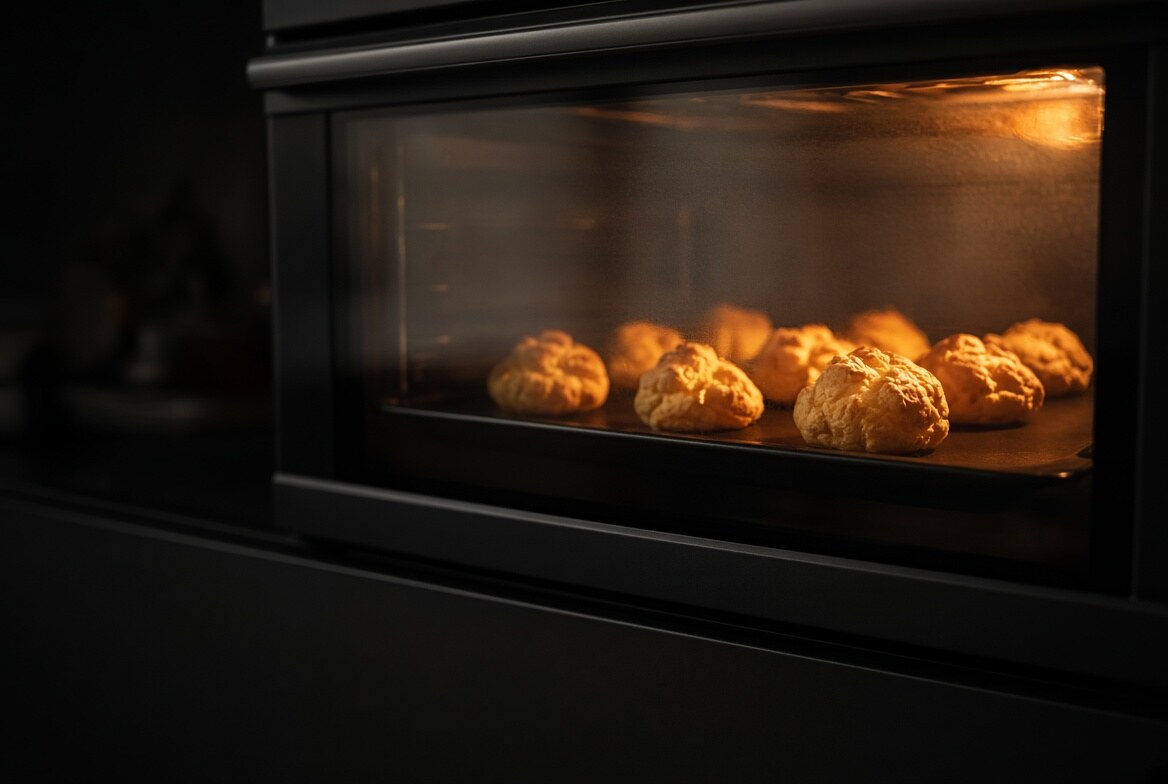
It's mistake number one, and everyone makes it at least once. To check, you open the door: cold air rushes in, the steam escapes, and the dough that hadn't set yet sags. It won't rise again (Saveur; Iowa State University Extension).
The fix Don't touch the door until the choux are well puffed, firm and golden. Turn on the oven light and look through the window.
2. They weren't dry inside
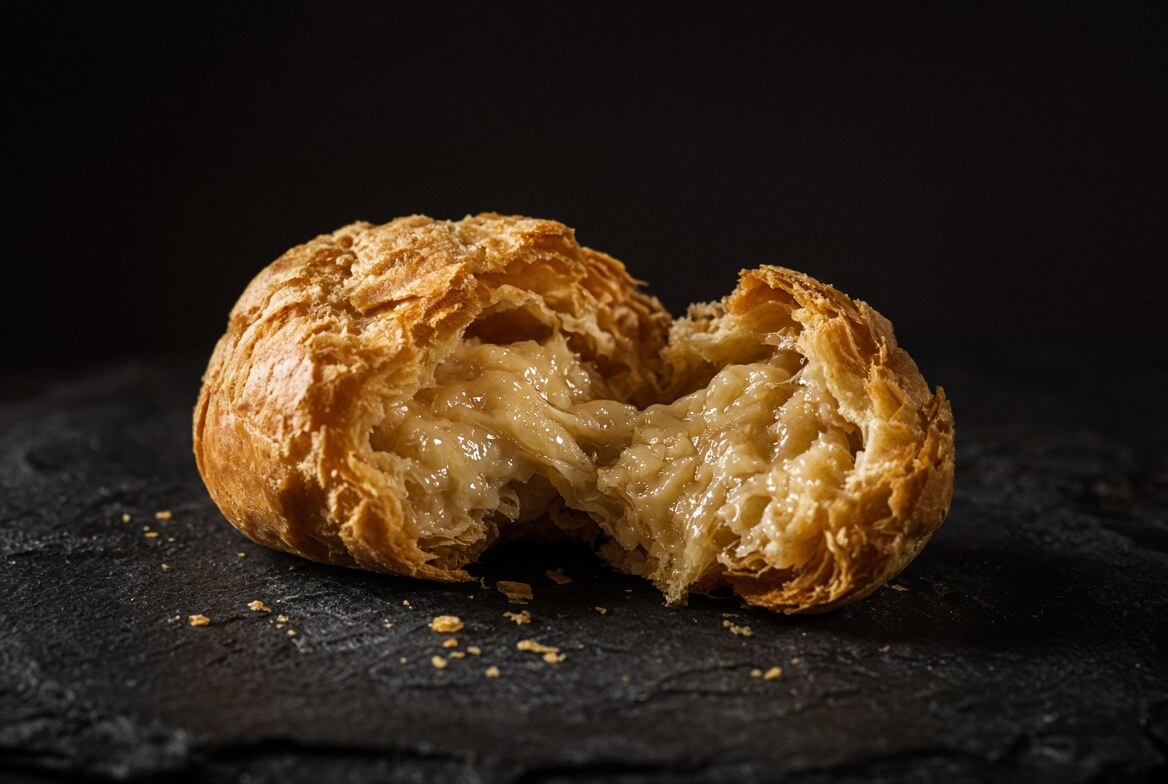
This is the sneakiest cause, because the choux looks perfect. Outside, it's golden. Inside, the walls are still soft and full of moisture. As it cools, the steam condenses, the walls can no longer carry their own weight, and the choux collapses (Joe Pastry).
A pale choux is often an unfinished choux. Aim for a deep, almost amber color, then turn one over and tap the bottom: when it's done, it sounds hollow (Meilleur du Chef).
The fix At the end of baking, let the moisture out: Le Cordon Bleu props the oven door ajar to drive off the steam (Le Cordon Bleu), King Arthur slits each choux on the side and puts it back in the oven for a few minutes (King Arthur Baking). Only at the end, once the shell has set.
3. Your dough wasn't right
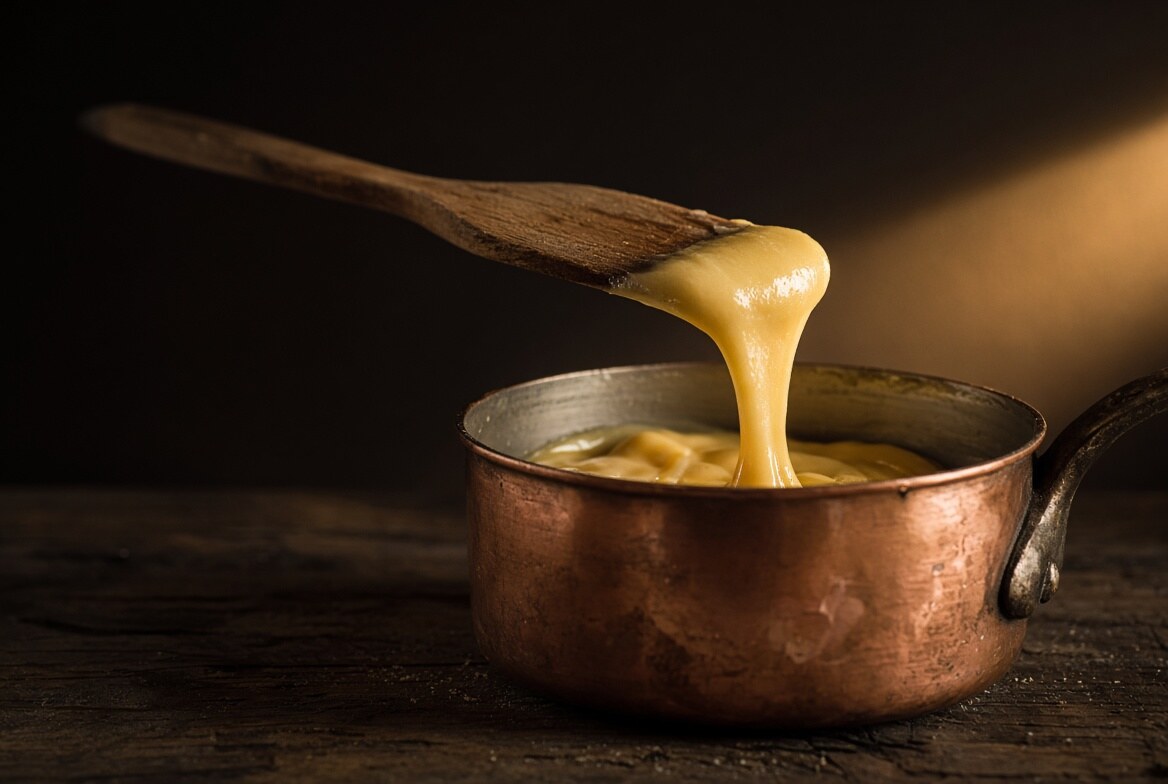
If your choux spread, crack or rise lopsided, the problem happened before the oven, in the saucepan.
First the panade: after adding the flour to the water and butter, you put it back on the heat, stirring. Stop as soon as the dough pulls away from the sides and forms a ball (Le Cordon Bleu), with a thin film on the bottom of the pan (Saveur). Not all pros push it that far: some stop as soon as the steam disappears from the sides (INRAE / AgroParisTech seminar, 2015).
Then the eggs. Let the panade cool to lukewarm before adding them, or they'll cook on contact: King Arthur gives a benchmark, below 52 °C (125 °F) (King Arthur Baking). Too much egg, and the choux crack; not enough, and they can't stretch (INRAE / AgroParisTech).
The fix Add the eggs one at a time. At first, the dough looks split; it turns smooth again as you add the eggs. Stop when it falls from the spatula in a “V” (Le Cordon Bleu).
4. Your oven wasn't at the right temperature
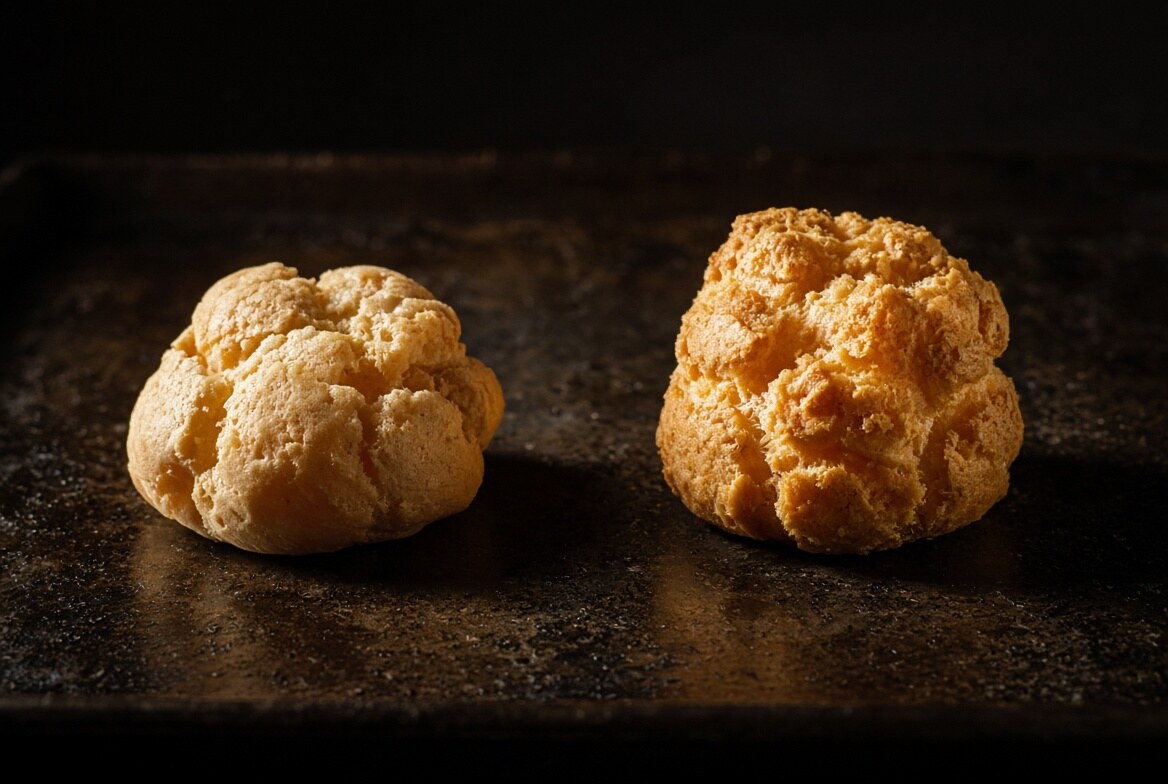
Here the sources disagree, and we're not going to pretend otherwise. French schools bake at a fixed temperature: 180 °C (350 °F) for 35 minutes at Le Cordon Bleu, 170 °C (340 °F) convection at Meilleur du Chef. On the American side, recipes start hotter, around 220 °C (425 °F), then lower the heat (King Arthur Baking; Joe Pastry). An oven that's too cold, on the other hand, keeps choux from rising (Iowa State University Extension).
What matters more than the number: that your oven is really at the temperature it displays. We don't know yours, and that's exactly why you need to check it.
The fix Put an oven thermometer on the rack: Joe Pastry recommends it to find out what your oven really does (Joe Pastry).
The verdict Your choux collapse because they come out of the oven before they're dry, not because your recipe is bad. Don't open the door until they're nicely golden, bake them longer than you'd dare, and finish them with the door ajar.
To go further
- Choux pastry, step by step — Le Chaudron's workshop
- Pâte à choux maison
- Éclair au chocolat
- Paris-Brest praliné
- Gougères au comté
Sources — Purdue Extension, “Cream Puff Science” · Iowa State University Extension · Saveur · Le Cordon Bleu · Meilleur du Chef · King Arthur Baking · Joe Pastry · Molecular gastronomy seminar, INRAE / AgroParisTech, 2015
Image credits — All images in this article are AI-generated for Le Chaudron (illustrations, not documentary photos).